Dokudami (Houttuynia cordata) is growing thick in my garden.
I know the humid summer is about to come.

《Dokudami in my garden.》
It is one of three traditional herb remedies in Japan along with Genno-shoko (Geranium thunbergii) and Senburi (Swertia japonica).
Dokudami prevails all over Japan and have strong smell.
It is the so-called weed, that is, the unwanted plant which grows persistently one after another. Because of this persistence and smell, it is disliked, sometimes hated, by many Japanese.
I was so surprised when I found it in a botanical garden in Britain. It grew modestly in northern climate and was seemingly appreciated.
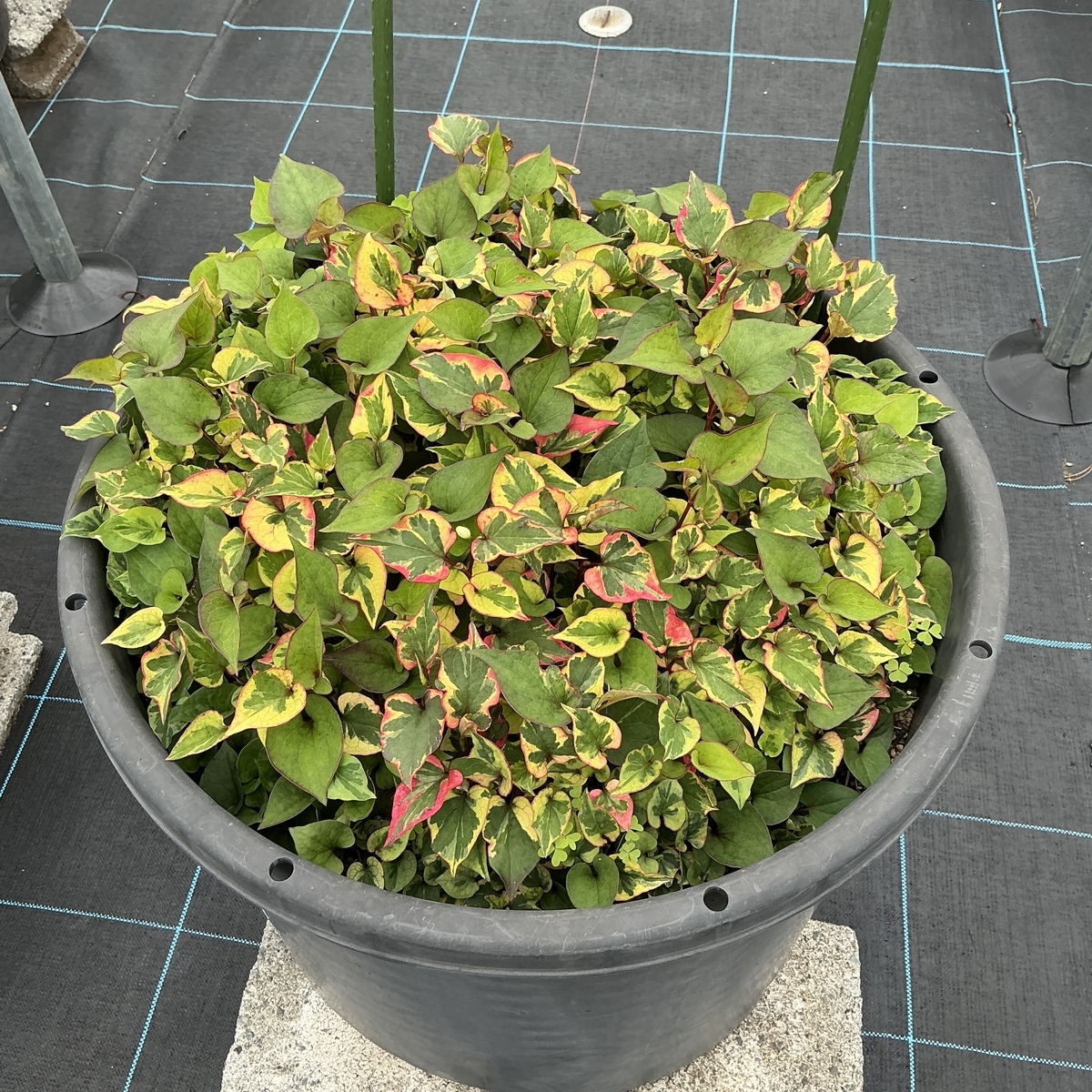
《Goshiki-dokudami in a botanical garden in Japan.》
When I was a child I didn’t like its smell, but now I don’t dislike it.
Once leaves are picked up and dried, its odor changes into a scent. Last year I made lotion with those leaves to use as an insect repellent. It is said to be effective for pimples, rash, and hair growth.
The washed and dried leaves could be infused to make a medical herbal tea, which are used as diuretics, laxatives, lowering blood pressure, and so on. Dokudami, when used as medical herbal tea, is called ju-yaku (十薬), where ju means ten and this herb had been said to be effective for as many as ten kinds of disorders.
Genno-shoko (Geranium thunbergii) keeps the guts healthy, that is, stops diarrhea, works as laxative and improve digestion. It is stipulated in the Japanese pharmacopoeia. Sometimes the tea is used as gargles for tonsillitis and stomatitis, as well as put into bath to warm the body.
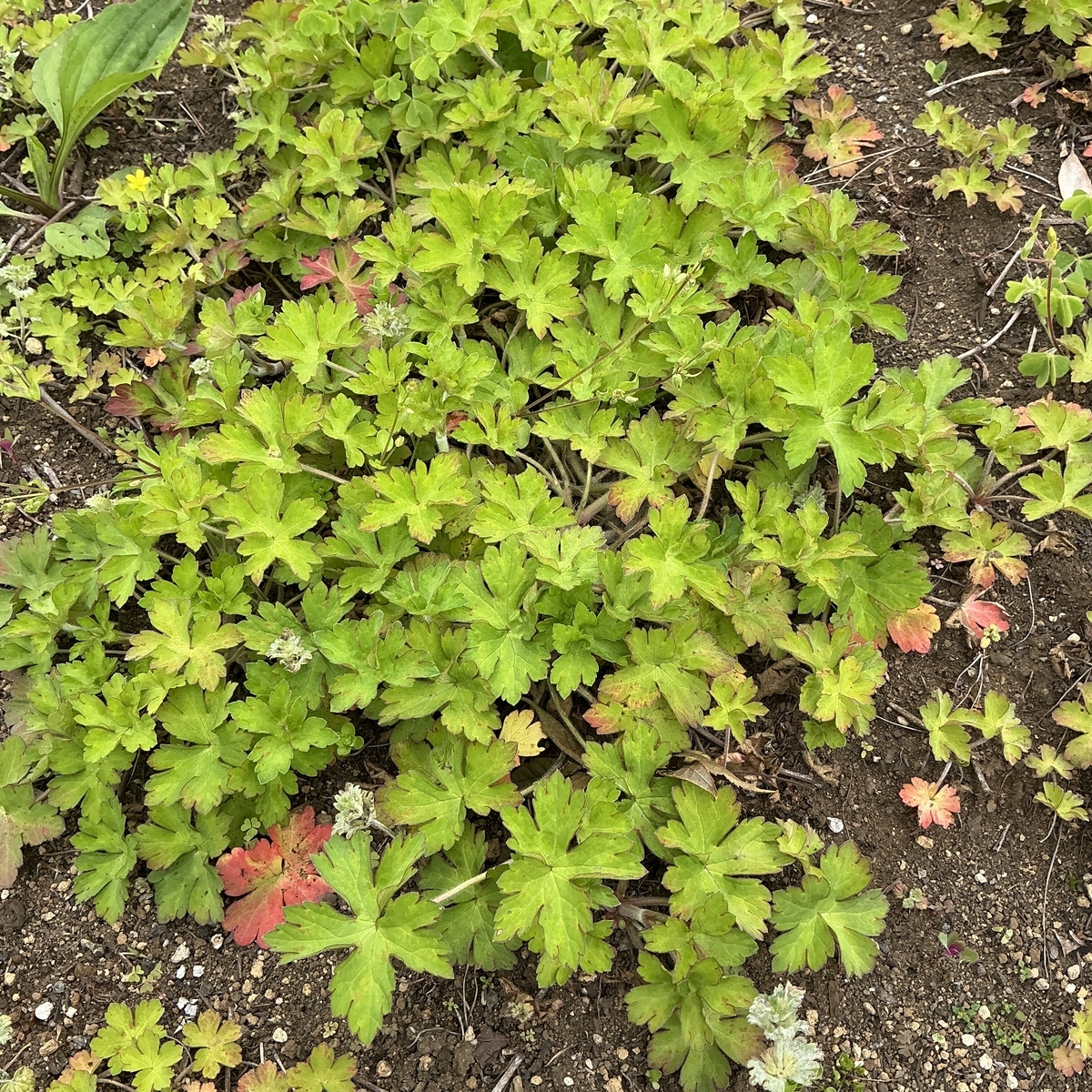
《Genno-shoko will have flowers in summer.》
The last one, Senburi (Swertia japonica) is effective for loss of appetite, indigestion, nausea and so on. Its strong bitterness stimulates the guts. The tincture has been said to be effective for hair growth, especially for patchy hair loss, and used to be commercially available. However I haven’t examined its efficacy. The sen means one thousand and buri(furu as a verb) means to shake. Thus, senburi means “it has strong bitterness even after it was shook ,or immersed in the hot water, thousand times.
They are not kampo medicine, but Japan’s traditional herbal medicine.
Ancient people found efficacy in plants close to their living space.